
Workbench for purchase order management
Supply chain buyers juggle 3-4 different reports daily to prioritize tasks, leaving them scattered and reactive. Meanwhile, LeanDNA's underlying data was rich but overwhelming. Suppliers and buyers needed clarity on priorites, especially by inventory criticality. How do we shift entrenched workflows from fragmented reports to a single source of daily truth?
Company: LeanDNA
Role: Prinicipal Product Designer
Partners: Product managment, Engineering, Customer success, QA


User research
Given the wide range of tasks that buyers and suppliers need to accomplish, we set out a slow release of tasks and EA to a few companies. We interviewed many users, and stack ranked what was crucial in helping their standard work.
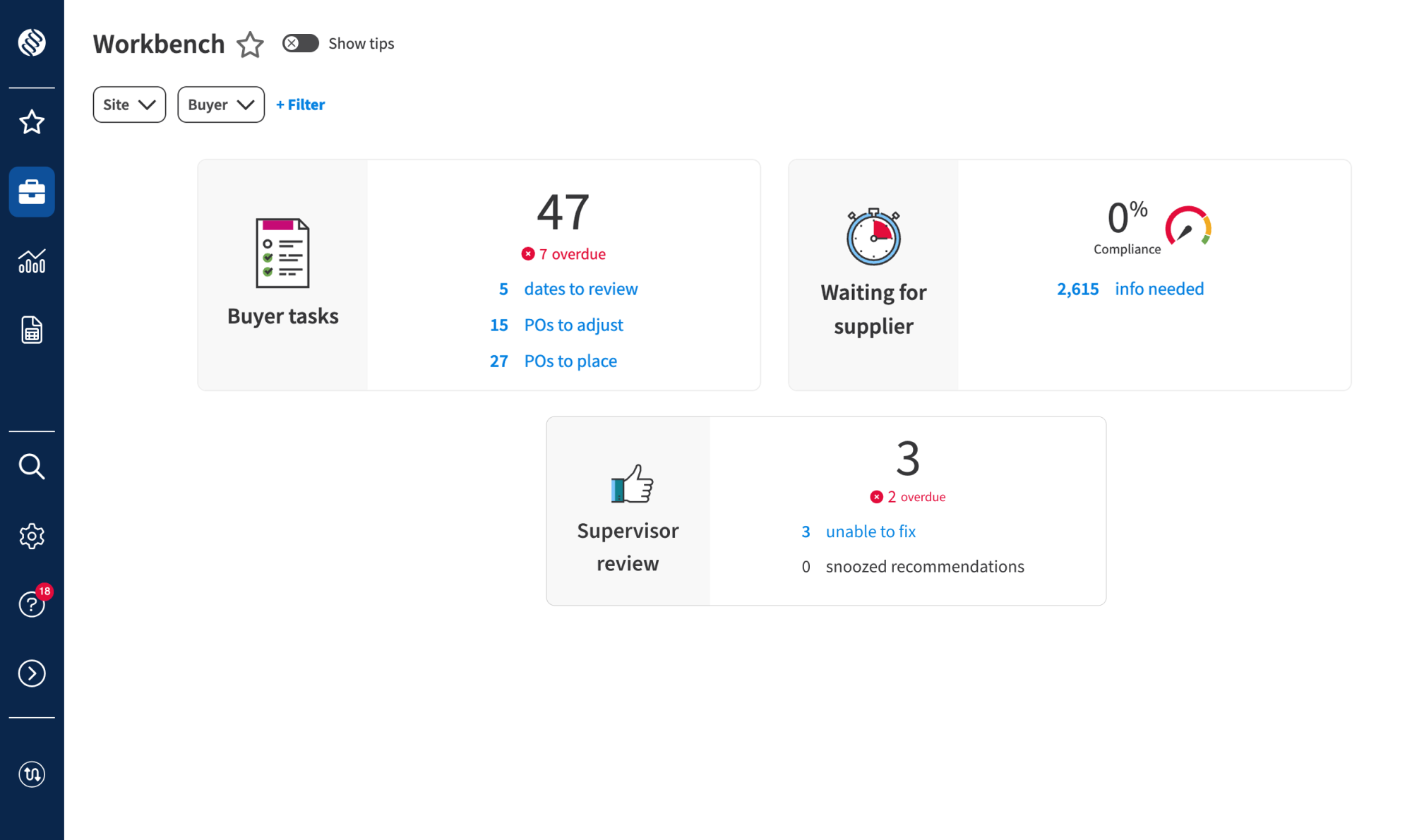
We built Workbench as a task-focused hub organized around views, not reports. This meant rethinking the UI around user preferences: spreadsheet-dense displays won users over elegant design.
Tasks to be done
- Suppliers need to enter dates for delivery; buyers need to review and approve those dates
- Buyers need to adjust purchase orders (PO); suppliers can approve or offer an alternative.
- Buyers need to convert purchase requisitions (PR) to POs that are sent to their suppliers for ordering
Design
Tabs
After testing, I realized tab styling that worked in other products failed here. Users didn't register subtle underlines. I moved to a more prominent tab treatment that didn't sacrifice the data density they craved.
Chat
Communicating with suppliers is one of the biggest challenges that buyers face. Automatic chat notifications on PO changes keep communication in context.
Views
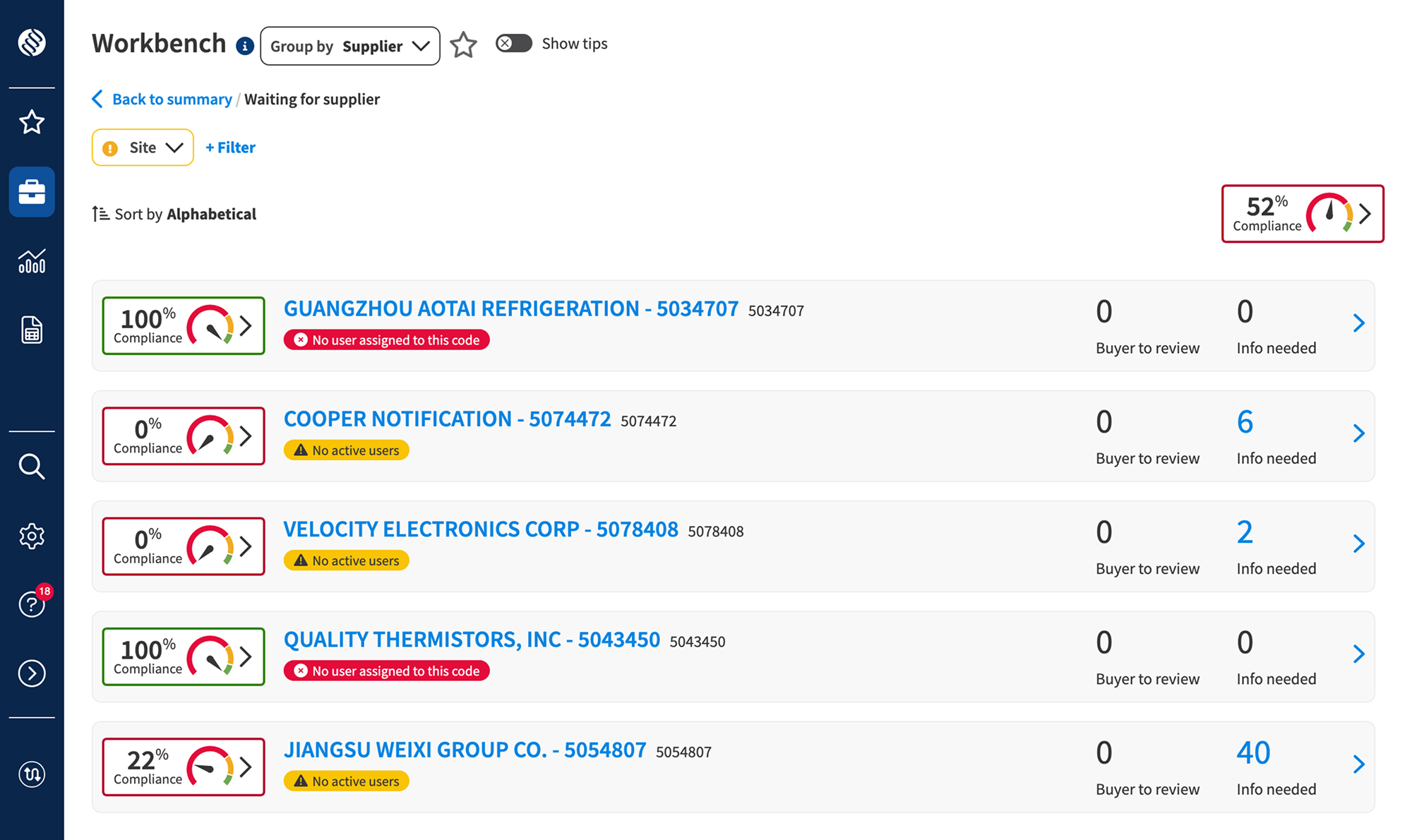
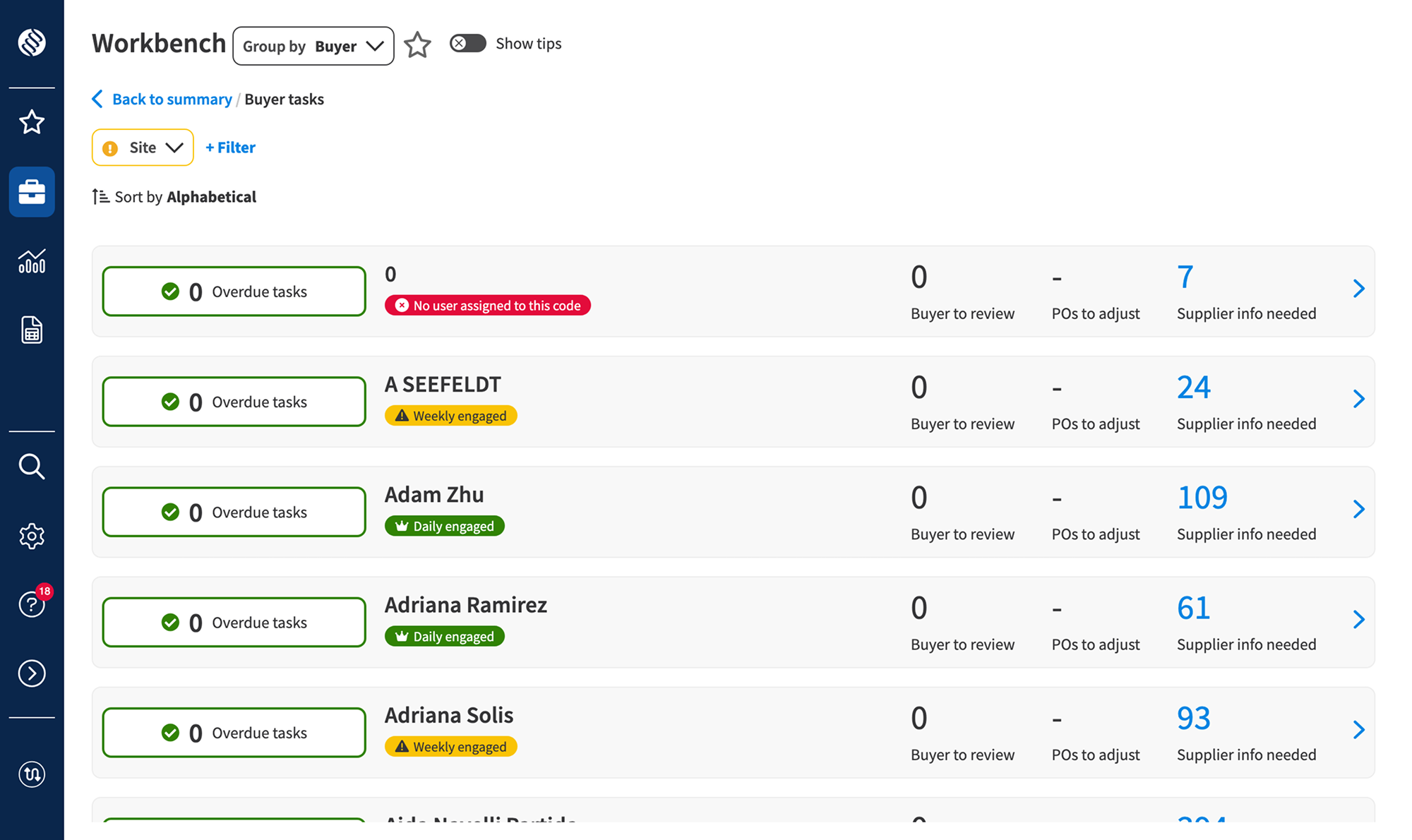
Users can review individual and collective performance through summary views. The product layers views by buyer/supplier performance cards that link into tab-filtered tables, allowing users to pivot and drill without context-switching.
Compliance scoring
Compliance scoring (based on task priority, not volume) surfaces team performance for supervisors.